

How to Use Hair Oil: A Stylist's Guide (Including Hair Systems)
Thomas StrangwoodHair oil is one of the most underused products in most home haircare routines, and one of the most genuinely transformative when used properly. The right hair oil adds shine, fights frizz, smooths the cuticle and protects against UV and heat damage, all in a single step. The wrong one (or the right one applied wrong) leaves the hair greasy, flat or coated.
We've been recommending and using hair oil with clients at Revive in Codsall for years, and it's one of the products we genuinely use on ourselves day in, day out. There's also one specific group of clients for whom hair oil isn't optional but essential, and we'll cover that in detail below. Here's the proper salon guide to what hair oil does, how to use it, and how to pick the right one for you.
What Does Hair Oil Actually Do?
Hair oil is a combination of plant-based or synthetic oils designed to moisturise, smooth and protect the hair. The science of why it works comes down to three things:
- Penetration into the hair shaft. Smaller-molecule oils (like argan, coconut and abyssinian) can penetrate the cuticle and moisturise the cortex from inside. This is what differentiates hair oil from a surface conditioner or styling cream.
- Surface smoothing. Oils also coat the cuticle on the outside, smoothing raised scales and laying them flat. A smooth cuticle reflects light evenly, which is what creates visible shine.
- Protective barrier. Once applied, the oil forms a thin barrier that protects against humidity (preventing frizz), UV (slowing colour fade), heat styling (reducing heat damage) and environmental pollutants.
The combination is genuinely useful. There aren't many other haircare products that do this much in one step. The trick is knowing how to apply it so you get the benefits without the greasy downside that gives hair oil its bad reputation.
Does Hair Oil Make Hair Greasy?
This is the single most common worry we hear from clients new to hair oil, and the honest answer is: only if you use it wrong. Greasy hair after applying oil almost always comes from three mistakes:
- Applying it to the roots. Roots have their own natural oil production from your scalp. Adding more oil there overloads what's already happening and weighs the hair down. Hair oil goes on mid-lengths and ends, never the scalp (unless the product is specifically formulated as a scalp treatment).
- Using too much. Two to three drops covers most shoulder-length hair. Longer hair can use up to five drops. People used to apply 10 to 15 drops at a time because the bottles are designed to encourage that, then wonder why their hair looks slick. Less is more.
- Choosing the wrong weight of oil. Heavier oils (like castor oil) are great for very coarse, thick or coily hair but will weigh down fine or medium hair. Lighter oils (like argan or abyssinian) suit a wider range of hair types without the weighing-down effect.
Get those three right and hair oil is one of the cleanest, most useful products in your routine. Most people who say "hair oil doesn't work for me" are actually saying "I was applying it incorrectly."
How to Apply Hair Oil Properly
The technique that gets the best results, used as we apply it in the salon:
- Dispense a small amount into your palm. Two to three drops for shoulder-length hair, up to five for long hair. Fewer is better than more — you can always add more, but you can't take excess off without rewashing.
- Warm the oil between your palms. A few seconds of rubbing your hands together warms the oil and starts breaking it down for easier distribution. Cold oil applied to hair tends to clump on the strands rather than spreading evenly.
- Apply to the mid-lengths first. Smooth your palms down the length of the hair from about ear-level to the ends. Don't go anywhere near the scalp.
- Comb through to distribute evenly. A wide-tooth comb or your fingers will spread the oil through every section of the hair. Patchy application gives patchy shine. Browse our hair brushes collection for combs and detangling brushes.
- Re-apply only where needed. The driest sections (usually the ends) will absorb the oil faster than less-damaged areas. If the ends still look thirsty, add one more drop just to those sections.
On dry hair, this is your finishing step. On damp hair, apply after washing and before styling. On extremely dry hair as a deep treatment, apply generously, leave for 10-30 minutes (or overnight), then wash out as normal — this is the "hair oil mask" technique that delivers serious moisture in a single session.
When to Use Hair Oil
Hair oil works in multiple ways throughout your routine. The most useful applications:
- As a finishing product on dry hair. After styling, a few drops smoothed over the lengths adds shine, tames flyaways and gives the hair a polished finish. This is the most common use.
- On damp hair after washing. Apply before blow-drying or air-drying to add moisture, prevent frizz and make the hair easier to detangle.
- Before heat styling. A small amount on damp hair before blow-drying or heat tools adds a protective barrier and lock-in shine. For dedicated heat protection, layer with one of our heat protection products.
- As a pre-wash mask treatment. Apply generously to dry hair (avoiding the roots), leave for 10-30 minutes or overnight, then wash as usual. Deeply hydrating treatment for very dry or chemically damaged hair.
- Between washes for shine refresh. A single drop rubbed between your palms and smoothed over dull or frizz-prone hair gives an instant refresh without needing to rewash.
- For taming flyaways. The smallest amount applied to your palms then smoothed over the top of the head settles flyaway hairs without making them look wet.
How Often Should You Use Hair Oil?
It depends on your hair type and what you're using it for.
- Dry or damaged hair: Daily, applied to damp hair after every wash and as a finishing step on dry hair between washes.
- Normal hair: Two to three times a week, mainly as a finishing product or before heat styling.
- Oily-prone hair: Sparingly, once or twice a week, applied only to the ends rather than mid-lengths.
- Pre-wash mask treatment: Once a week or once a fortnight as part of a wider treatment routine.
- For hair systems wearers: Daily, sometimes twice a day. More on this below.
Why Hair Oil Is Essential for Hair System Wearers
This is one of the most important uses of hair oil and one of the least talked about in mainstream haircare content. If you wear a hair system (sometimes called a hair piece, men's topper, or just "a unit") it's not just a nice-to-have — it's genuinely essential to long-term hair system care.
Here's why. A natural growing hair shaft is constantly being moisturised from within. Your scalp produces sebum, which is your body's natural oil, and it travels down the length of each strand to lubricate, protect and shine the hair. That's a system that works automatically every day on natural hair, and most people never have to think about it.
A hair system is different. The hair in a system is real human hair (in most cases), but it's no longer attached to a living scalp. There's no follicle producing sebum. The hair has no internal moisture supply. So unless you supplement it externally, the system will gradually dry out, becoming brittle, frizzy, dull and prone to breakage. The lifespan of a system that isn't properly oiled is genuinely shorter than one that is.
Hair oil replaces the sebum the system can't produce for itself. Used daily on the mid-lengths and ends of the system, it:
- Restores the moisture and shine the system lost when it became detached from a living scalp
- Keeps the cuticle of each strand smooth, which reduces tangling and matting
- Adds protection against UV, environmental damage and heat styling — all of which damage system hair faster than they damage growing hair, because there's no replacement growth happening
- Extends the life of the system itself, often substantially. Properly oiled systems typically last 30-50% longer than dry, neglected ones
- Improves how the system feels to wear — softer, more natural, with movement that's closer to natural growing hair
For more on hair systems specifically — care, fitting and product recommendations — see our male hair systems page. Hair systems are something we genuinely understand at Revive — the salon has worked with system clients for years, and we use them ourselves.
How Hair System Wearers Should Apply Hair Oil
The technique is slightly different from natural hair:
- Apply daily, sometimes twice daily. Once in the morning before styling, and a small refresh in the evening if the system feels dry. Natural hair gets daily moisture from sebum; a system needs that delivered externally.
- Focus on mid-lengths and ends. Just like natural hair, never apply at the base where the system meets the scalp area. Oil at the base can interfere with adhesives and bond integrity.
- Use a light-to-medium weight oil. Argan oil, abyssinian oil or a light blend works best. Heavier oils (castor, coconut for some) can weigh down the system or make it look unnaturally shiny.
- Comb gently through with a wide-tooth comb. Always comb a hair system gently — system hair doesn't regrow if you pull strands out. Distribute the oil through the lengths without aggressive brushing.
- Before bed: A small amount of oil before sleep helps offset the friction damage from pillows overnight. A silk or satin pillowcase alongside makes a significant difference.
- After swimming or showering with the system: Apply oil immediately to replace the moisture stripped by chlorine, salt water or hot showers.
The Best Hair Oil: Maria Nila True Soft Argan Oil
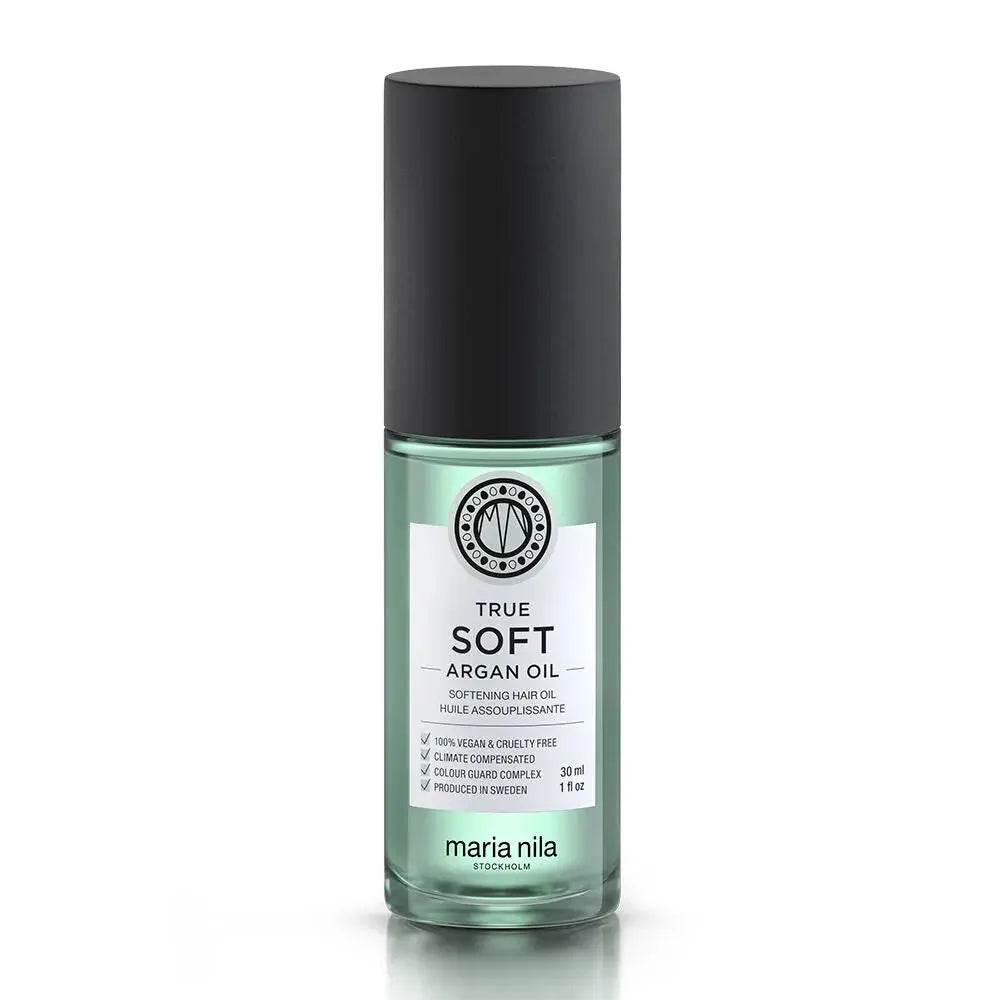
Of all the hair oils we've used in the salon over the years, Maria Nila True Soft Argan Oil is the one we most consistently recommend. It's the one we use ourselves and the one we hand to clients who ask "what's the one product I should add to my routine?"
The formula combines three lightweight oils that pull their weight in different ways:
- Argan oil for shine, frizz control and moisture (the headline benefit)
- Rapeseed oil for omega-3 and omega-6 fatty acids that condition deeply
- Abyssinian oil for a non-greasy finish that absorbs cleanly without weighing the hair down
The blend is rich in antioxidants and fatty acids, which is what gives the visible shine and frizz reduction. Importantly, it also contains Maria Nila's Colour Guard Complex, which protects the hair from UV damage. UV is one of the most underestimated causes of hair colour fading and damage, and most hair oils don't address it at all. For colour-treated clients, this single feature makes a real difference to how long the colour lasts.
It's a 30ml bottle, which is small but lasts a long time because the recommended amount is just two or three drops per application. Most clients find one bottle lasts 4-6 months of regular use. The size also makes it convenient for travel (well under the 100ml hand luggage limit), gym bags or salon kits.
Other things worth knowing about the formula:
- 100% vegan, certified by the Vegan Society
- 100% cruelty-free, certified by Leaping Bunny
- Climate-positive certified, with packaging using post-consumer recycled material
- Sulphate-free, paraben-free and colour-safe
- Suitable for all hair types, including chemically treated, bleached and damaged hair
It also forms part of the wider Maria Nila True Soft system for dry hair. We've covered the full True Soft range in detail in our argan oil for hair guide.
Hair Oil for Specific Hair Types
For Dry Hair
If your hair is naturally dry or chemically dehydrated, hair oil is one of the most useful single additions you can make to your routine. Maria Nila True Soft Argan Oil works brilliantly here, especially when paired with the matching True Soft Shampoo and Conditioner. For other dry hair options, browse our conditioner for dry hair collection.
For Damaged Hair
For chemically damaged hair (from bleach, colour, perms or keratin), hair oil works alongside repair-focused products like the Maria Nila Structure Repair Shampoo we covered in our Structure Repair guide. The oil seals in the repair work and adds the finishing shine and softness.
For Blonde, Silver or Grey Hair
Hair oil is particularly useful for blondes because bleach is one of the most damaging hair processes there is, and oil restores some of what bleach removes. For blonde specifically, choose a translucent oil rather than a darker or pigmented one — pigmented oils can add warmth that you don't want. Maria Nila True Soft Argan Oil is a translucent oil that lets cool blonde tones stand out. Pair with the Maria Nila Sheer Silver Shampoo for toning alongside (covered in detail in our Sheer Silver guide) and you've got a complete blonde care routine.
For Curly or Wavy Hair
Curls and waves benefit enormously from hair oil because the natural cuticle structure of curly hair lifts more than straight hair's does, which means it tangles more and loses moisture faster. Apply a few drops of hair oil to damp curls after washing and scrunching with a curl product, then air-dry or diffuse. Browse our wider curly hair collection for matching products.
For Fine Hair
Fine hair benefits from hair oil but needs less of it. Use one drop, focused on the ends only, applied to dry rather than damp hair so it doesn't flatten the roots. For more on fine hair routines specifically, see our how to add volume to fine hair guide.
For Hair System Wearers
As covered above, daily oil application is essential. Maria Nila True Soft Argan Oil is one of our top recommendations because it's translucent (won't add unwanted warmth), lightweight (won't make the system look unnaturally slick), and contains UV protection (genuinely useful since systems are exposed to UV the same as natural hair but can't recover from it the same way).
Hair Oil FAQs
Can I use hair oil every day?
For dry, damaged or chemically treated hair: yes, daily use is fine and often beneficial. For normal or oily-prone hair, 2-3 times a week is plenty. For hair system wearers, daily is essential. The key is to apply small amounts (2-3 drops for most hair lengths) and focus on mid-lengths and ends.
Should I apply hair oil before or after shampoo?
Both work, but for different reasons. Before shampoo (as a pre-wash treatment) gives a deep moisturising mask effect — apply generously, leave for 10-30 minutes, then wash out. After shampoo (and conditioner) is the standard daily application — a few drops on damp or dry hair, focused on the lengths and ends. Most clients use the post-wash application as their default, with the occasional pre-wash mask for deeper treatment.
Can hair oil replace conditioner?
No, they do different jobs. Conditioner cleans up after shampoo by smoothing the cuticle and adding lightweight moisture. Hair oil adds richer moisture and surface protection but doesn't rinse out and doesn't do the cuticle-smoothing work the same way. Use both together for best results.
Will hair oil weigh down fine hair?
Not if you use it correctly. The trick for fine hair is to use less (one drop maximum), apply only to the ends, and use on dry rather than damp hair. Maria Nila True Soft Argan Oil's lightweight formula is particularly suited to fine hair because it absorbs cleanly without sitting on the surface.
Does hair oil protect against heat damage?
It provides some thermal protection by forming a light barrier on the cuticle, but for serious heat styling (above 200°C or daily heat use) layer with a dedicated heat protectant. Browse our heat protection collection for purpose-built options.
Can I sleep with hair oil in my hair?
Yes, and this is actually one of the most effective ways to use it. Apply hair oil to dry hair before bed, sleep on a silk or satin pillowcase to minimise transfer, and either wash in the morning (for a deep treatment effect) or just brush through (for a more subtle moisture refresh). Hair system wearers especially benefit from overnight oil application.
How long does a 30ml bottle of hair oil last?
For daily use with 2-3 drops per application, a 30ml bottle of Maria Nila True Soft Argan Oil typically lasts 4-6 months. Used sparingly (or just as a finishing product 2-3 times a week), the same bottle can last 8-12 months.
Is hair oil safe for hair extensions?
Yes for human hair extensions. The lightweight oil helps maintain shine and prevent the dryness that extensions are prone to (similar to hair systems, extensions don't have a sebum supply). Avoid applying oil at the bond or weft area, where it can interfere with adhesives. Focus on the mid-lengths and ends.
Is Maria Nila True Soft Argan Oil vegan and cruelty-free?
Yes to both. Maria Nila is 100% vegan (Vegan Society certified), 100% cruelty-free (Leaping Bunny certified) and climate-positive certified. The whole brand is sulphate-free, paraben-free and colour-safe.
Can I use hair oil after a keratin or Brazilian treatment?
Yes, and it's particularly useful for maintaining the smoothness of keratin-treated hair between salon visits. Maria Nila True Soft Argan Oil is colour-safe and treatment-safe, so won't strip the keratin treatment.
Browse the full Maria Nila collection at Revive, our complete hair oil collection across all professional brands, our treatments and masks range, and our male hair systems page. We're a working hair salon, not a faceless reseller, so if you're new to hair oil and not sure where to start (or if you're a hair system wearer looking for genuine, knowledgeable advice), drop us a message and we'll talk you through it.
Free UK delivery on every Maria Nila order at Revive Hair Artists.


