

How to Add Volume and Body to Fine Hair: A Salon Stylist's Guide
Thomas StrangwoodFine hair gets a bad reputation. It's often described by what it can't do, like hold a style, keep volume, or look anything other than flat by lunchtime. But the truth is, fine hair isn't the problem. The wrong products are.
Fine strands are actually capable of incredible body and movement. They just need a different approach than we'd take with thicker hair types. With the right technique and the right products, you can get volume that genuinely lasts, without your hair feeling coated, stiff or weighed down. Here's how we do it in the salon.
Why Fine Hair Loses Volume So Quickly
Fine hair has a smaller diameter than other hair types, which means each individual strand carries less natural weight and structure. On one hand, this makes it incredibly soft and lightweight. On the other, it means it responds much more dramatically to gravity, humidity and product weight than coarser hair does.
The most common mistakes that make fine hair go flat:
- Heavy conditioners or styling products that sit on the hair and drag it down.
- Applying products to the roots (oils, masks, heavy leave-ins) that block lift at the base.
- Not using any styling products at all, so there's nothing structural for the style to hold onto.
- Over-washing, which can strip the scalp and trigger excess oil production, making hair go limp faster.
- Blow-drying without a product underneath, so the heat has nothing to set into and the volume drops within an hour.
The good news: all of these are fixable. And the fix starts at the roots.
Paul Mitchell Extra Body Root Boost: Lift Where It Matters Most
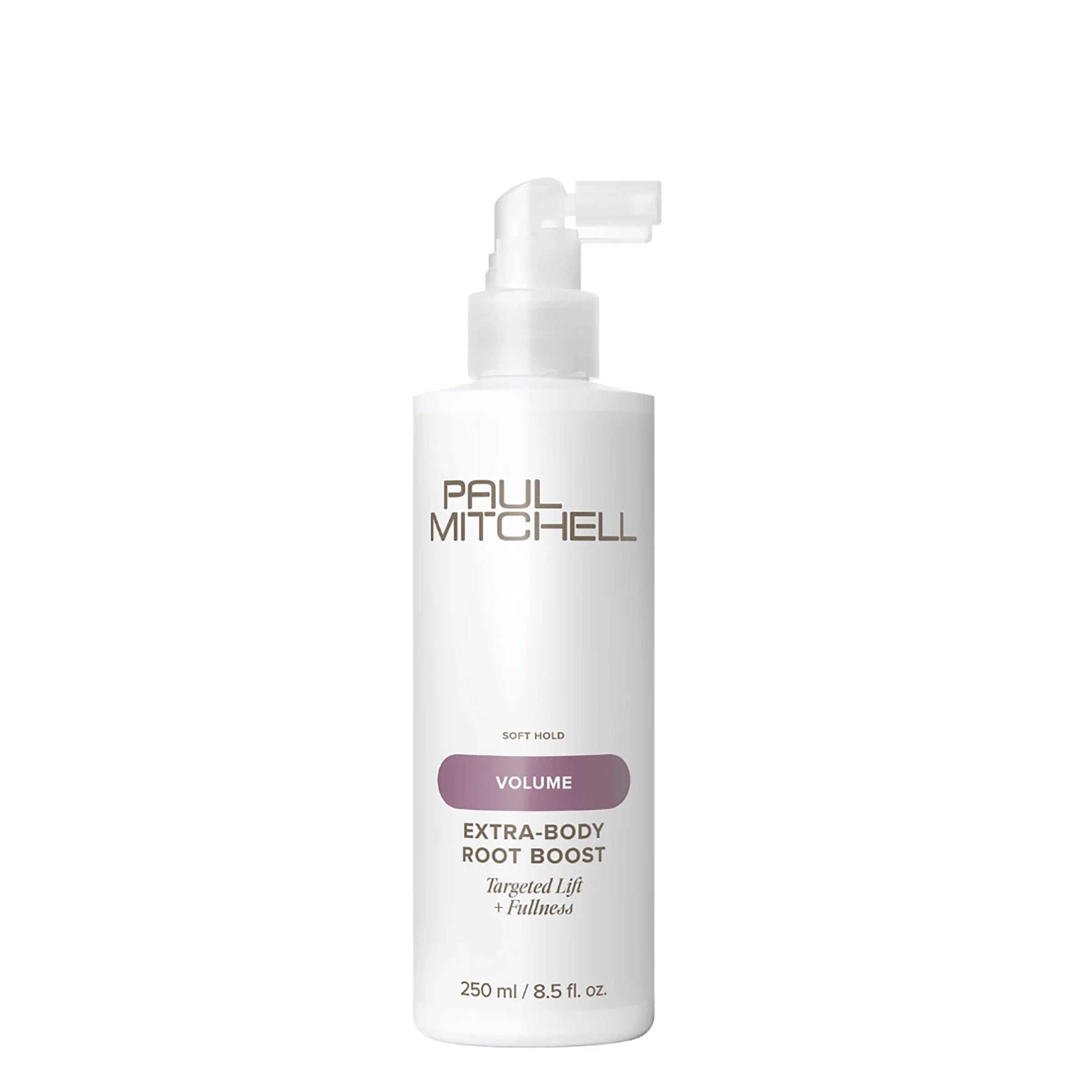
Volume lives at the root. You can tease, backcomb and spray all you like through the mid-lengths and ends, but if the root is flat, the style will always look flat. Paul Mitchell Extra Body Root Boost is designed specifically to target this.
It's a lightweight volumising spray that lifts hair at the root and adds body from the base up, without adding the weight or stiffness that ruins most volume products. Applied to damp roots before blow-drying, it works with the heat to build real, lasting lift that doesn't collapse the moment you step outside.
It works especially well for:
- Fine or flat hair that drops within an hour of styling
- Anyone who wants more lift without spending more time on it
- Hair that looks good immediately after washing but goes limp once dry
- Anyone who's tried volumising sprays before and found them too heavy, sticky or short-lasting
Stylist tip from the salon: Apply Root Boost directly to the roots on damp hair, lifting sections with your fingers as you spray. Then flip your head upside down for the first few minutes of blow-drying, pointing the nozzle downward along the shaft. The combination of the product and gravity working against each other creates lift that sets into the hair as it dries. We use this technique on clients at Revive in Codsall all the time, and it's the difference between volume that lasts the day and volume that lasts the trip home.
Paul Mitchell Extra Body Sculpting Foam: Body From Root to Tip
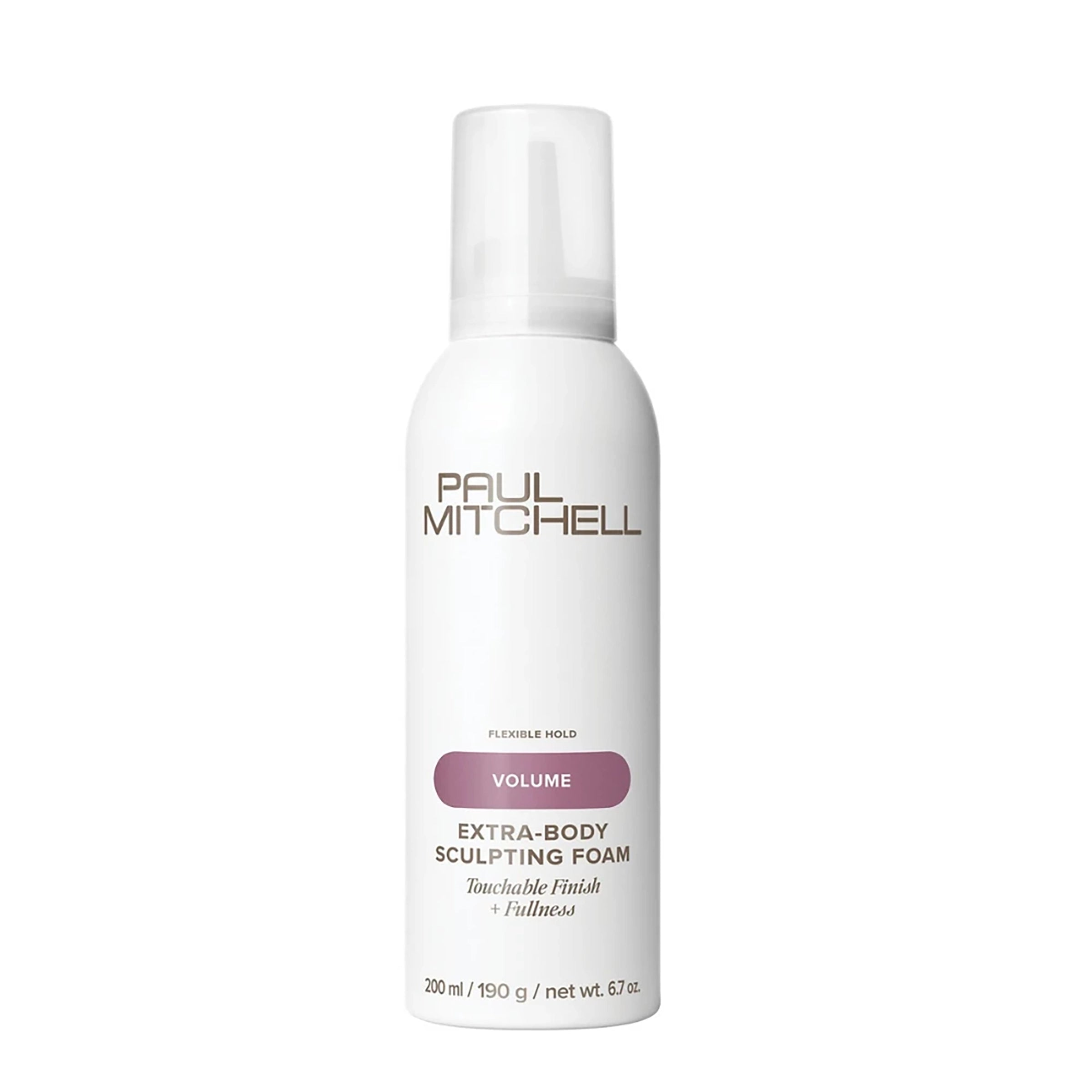
While Root Boost targets the base, Paul Mitchell Extra Body Sculpting Foam works through the lengths to add fullness, texture and a soft hold across the whole of the hair.
Unlike a lot of volumising mousses that leave hair feeling crunchy or coated, this foam dries to a soft, pliable finish. It adds body and definition without stiffness, which means your hair still moves naturally and doesn't look over-done. It's a salon classic for a reason, and it crosses over beautifully between blow-out styling and natural drying.
It's a great match for:
- Natural drying: enhances texture beautifully without needing heat
- Diffused curls or waves that need definition without crunch
- Blowouts on fine hair where you want extra body through the lengths, not just at the roots
- Anyone after a fuller, thicker-looking finish who doesn't want to use heavy creams or oils
Stylist tip: Pump a golf-ball-sized amount into your palm, rub your hands together to emulsify it, then scrunch it upward through damp hair from ends to roots. For a blowout, distribute it more evenly through the mid-lengths with a wide-tooth comb before drying. Either way, don't over-apply. Fine hair responds much better to a light, even distribution than to a heavy coat. More foam doesn't mean more body. It usually means flatter hair an hour later.
Using Them Together: The Full Volume Routine
Root Boost and Extra Body Sculpting Foam are good products on their own, but they're significantly more effective used as a pair. Together they cover every part of the hair: base lift from Root Boost, all-over body from Sculpting Foam. The combination is the difference between fine hair that looks fuller and fine hair that genuinely behaves like it has more body.
- Start with clean hair. Volume products work best on freshly washed hair with no build-up holding the roots down. Paul Mitchell Shampoo Two is a daily-use shampoo with a slightly deeper cleanse than Shampoo One, ideal for clearing the buildup that flattens fine hair. Browse the full Paul Mitchell shampoo range for options, or look at our shampoo for thin hair collection if your hair is fine and on the limp side at the moment.
- Blot dry gently. Press a towel against your hair rather than rubbing. Rough-towelling fine hair is one of the biggest causes of breakage, and you also lose the body you're about to build. Hair should be properly damp at this stage, not soaking and not nearly dry.
- Apply Root Boost to the roots. Lift small sections with your fingers and spray directly at the base. Don't be shy with coverage at the roots, but stop there. The product is designed for the scalp area, not the lengths.
- Apply Sculpting Foam through the lengths. Emulsify in your palms first, then work through mid-lengths and ends. Avoid the roots at this stage. Root Boost has that area covered, and adding foam on top would weigh it down.
- Blow-dry with a round brush. Use medium heat and work in sections, lifting each section away from the head as you dry to build volume at the base. Use the cool shot at the end of each section to set it before releasing the brush. Point the nozzle downward along the shaft to smooth the cuticle and add shine.
- Finish with a light hairspray if needed. For extra longevity, a light mist of Paul Mitchell Freeze and Shine Super Spray across the top locks in the volume without flattening it. Don't go heavy. You're locking in the lift you've just built, not coating the hair.
Common Myths About Fine Hair
Most of what people believe about fine hair is wrong, and the bad advice keeps fine-haired clients trapped in routines that make things worse. Here's what we tell people in the salon:
"Fine hair can't hold volume." It absolutely can. It just needs the right products applied in the right places. Root lift products and lightweight foams are specifically designed for this purpose. Fine hair holding volume is a technique issue, not a hair issue.
"Using more product gives more volume." The opposite is true. Too much product weighs fine hair down and makes it go flat faster. Less product, applied correctly, almost always gives better results. Most clients are using two to three times more product than they need.
"You need to wash fine hair every day to stop it going flat." Over-washing stimulates oil production at the scalp, which makes fine hair go limp faster. For most fine-haired people, washing every other day with the right shampoo gives better results than daily washing. Build the gap up gradually if you're currently washing daily.
"Conditioner is bad for fine hair." Fine hair still needs moisture, especially through the lengths and ends. Apply conditioner from mid-lengths to ends only, never the roots. That keeps the hair hydrated and prevents breakage without weighing the base down. The "no conditioner" myth costs a lot of fine-haired people their hair length over time.
"Volume products always feel crunchy or sticky." The old generation of mousses did, which is why a lot of people stopped using them. Modern formulas like Extra Body Sculpting Foam dry to a soft, brushable finish. If you've been put off volume products by something you used in 2010, it's worth trying again.
Fine Hair Volume FAQs
How often should I use Root Boost and Sculpting Foam?
Use them every time you wash and style your hair, which for most fine-haired people is every other day. They're designed for regular use and the formulas are lightweight enough not to cause buildup at the levels you'd actually apply. If you find your hair starts to feel weighted after a few weeks, switch to a clarifying shampoo once a week to reset.
Can I use Extra Body Root Boost on dry hair?
It's designed for damp hair before blow-drying, where the heat sets the volume into the hair. You can use a small amount on dry hair for a quick lift at the roots later in the day, but the effect is much shorter-lived. For lasting volume, apply when damp and blow-dry.
Does Paul Mitchell Extra Body Sculpting Foam make hair crunchy?
No, this is one of the things it's specifically designed not to do. The formula dries to a soft, pliable finish that brushes through easily without leaving the stiff, sticky residue older mousses are known for. As long as you don't massively over-apply, the finish stays touchable.
Is Paul Mitchell Extra Body vegan and cruelty-free?
Paul Mitchell has been cruelty-free since 1980. Specific product vegan status varies across the range, so check the individual product pages for current confirmation. For a fully vegan-certified alternative, the Paul Mitchell Clean Beauty range covers volume-focused styling pieces with a vegan formulation.
Will volumising products damage colour-treated hair?
Not at the levels you'd use them, no. Both Root Boost and Sculpting Foam are colour-safe and gentle enough for regular use on dyed hair. What can damage colour is washing too often with the wrong shampoo, so if you have colour-treated fine hair, focus on a colour-safe shampoo and condition properly through the ends.
What's the difference between a mousse and a foam?
In modern hair products, the terms are used pretty interchangeably. Both come out of the can as foam and are designed to add hold and body to damp hair before styling. Older "mousses" tended to be stiffer and stickier, which is why some brands now market the lighter formulas as "foams" instead. Extra Body Sculpting Foam is technically a mousse, but it's a long way from the crunchy 1990s version.
Can I use these products if I have fine curly or wavy hair?
Yes, and Sculpting Foam in particular suits fine wavy or curly hair really well. Scrunch it into damp hair from ends to roots, then air-dry or diffuse on low heat. It adds definition and body without the heaviness that ruins curl pattern on fine textures. For very curly fine hair, the Paul Mitchell Tea Tree Lavender Mint range also crosses over beautifully for curl care and is worth exploring alongside.
Browse the full Paul Mitchell styling range for the wider Extra Body line and the rest of the Paul Mitchell styling collection, our shampoo for thin hair and conditioner for thin hair collections, or our complete mousse and foam collection across all professional brands. We're a working hair salon, not a faceless reseller, so if you're stuck choosing between products or you've tried volume routines before and they haven't lasted, drop us a message and we'll talk you through it.
Free UK delivery on every Paul Mitchell order at Revive Hair Artists.


