

Split Ends Explained: Causes, Prevention and How to Fix Them
Thomas StrangwoodSplit ends — we all get them, we all hate them, and we all wonder if snipping is genuinely the only answer. The honest truth from a salon stylist's perspective is this: once a hair has actually split, no product can permanently fuse it back together. But you can absolutely prevent split ends from getting worse, stop new ones forming, and dramatically extend the time between trims. The right routine makes a bigger difference than most people realise.
We've recommended milk_shake for split-end-prone clients at Revive in Codsall for years, because the brand's protein-rich, milk-based formulas are particularly good at what split ends need most: nourishment, sealing and protection. Here's the proper salon guide to what's actually happening when you get split ends, what causes them, and how to use milk_shake to keep them in check.
What Are Split Ends, Really?
A split end is exactly what it sounds like: the very end of a hair strand has split into two (or sometimes three or more) separate sections. It happens because the outer protective layer of the hair (the cuticle) has worn away at the tip, exposing the inner core of the strand to the elements. Once exposed, the inner core frays, splits and continues splitting upwards along the strand if left untreated.
Split ends typically show up as:
- Frayed or feathered tips visible when you hold a section of hair up to the light
- Strands that feel rough or "crunchy" in the bottom inch or two compared to the rest of the hair
- Hair that tangles easily, especially at the ends, where the split sections catch on each other
- Dull or matte-looking ends while the mid-lengths still look healthy and shiny
- Length that stops growing because the ends are breaking off as fast as the roots are growing
If you're seeing any of these, you've got split ends. The good news is that catching them early and adjusting your routine prevents the splits from progressing further up the strand, where they cause real visible damage.
What Causes Split Ends?
Split ends don't happen overnight, and they're not caused by one single thing. They build up over time from a combination of factors, most of which are part of normal everyday haircare:
- Excessive heat styling. Hot tools at 200°C+ progressively damage the cuticle, leaving it weaker and more prone to splitting. Daily heat styling without protection is the single biggest cause we see in the salon.
- Over-washing or harsh shampoos. Standard sulphate-based shampoos strip the cuticle of natural oils with every wash. Over-washing dries out the ends specifically, which is where the cuticle is thinnest to begin with.
- Colour and bleach damage. Chemical processes lift and weaken the cuticle. Bleached hair is particularly prone to split ends because the structural protein inside the cortex has been altered.
- Dryness from sun, wind or cold air. The ends of your hair are the oldest part — they've been exposed to the most weather, sun and damage over months or years. Dehydration shows up at the ends first.
- Rough handling. Aggressive towel-drying, brushing wet hair without care, tight elastic ties and friction from cotton pillowcases all contribute to wear at the cuticle.
- Skipping regular trims. Once a split has started, it travels up the hair shaft. Regular trims remove the splits before they progress and cost you more length in the long run.
If most of those sound familiar, you're not alone — most people do most of them.
How to Beat Split Ends Without Giving Up Your Hair Tools
The realistic truth is that you're probably not going to stop blow-drying or straightening your hair entirely. We wouldn't either. The trick is to build a routine that protects and repairs your hair enough to outweigh the damage you're causing through styling. Here's the milk_shake-led routine we recommend.
Step 1: Nourish and Hydrate With Moisture Plus
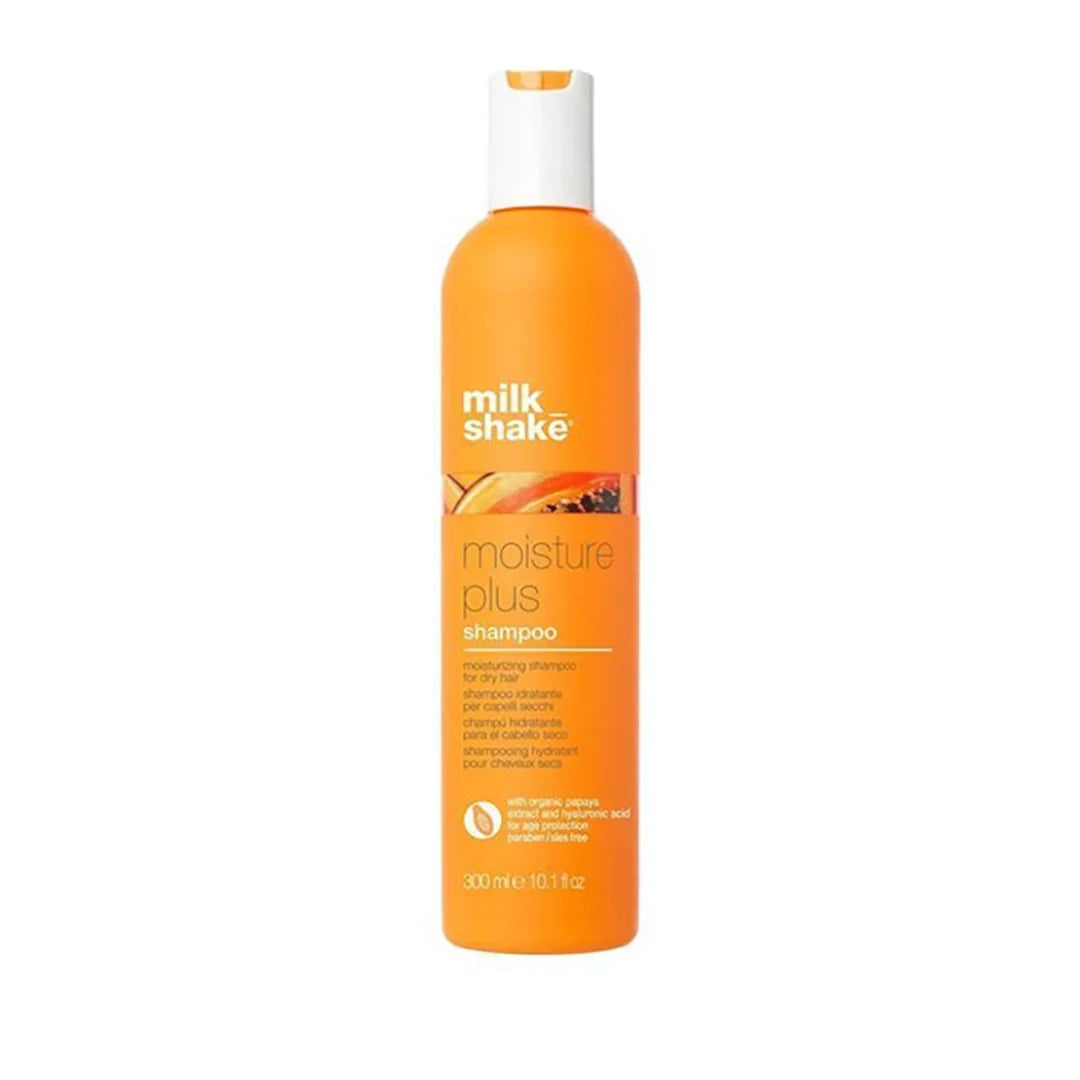
Split ends love dry hair, so the foundation of any anti-split routine is proper hydration. The milk_shake Moisture Plus Shampoo is built specifically for thirsty, dehydrated hair. The formula is rich in hyaluronic acid (one of the most reliable moisture-binders in cosmetic chemistry, the same active that runs through skincare) and papaya extract, which adds gentle enzymes that soften the cuticle and improve product absorption.
The key thing is that milk_shake uses milk proteins as the base ingredient across the whole range. Milk proteins coat the hair shaft and reinforce the cuticle, which is exactly what split-end-prone hair needs — a protective layer that holds moisture in and external damage out. The hyaluronic acid and papaya extract in Moisture Plus build on that foundation specifically for dry, dehydrated, split-prone hair.
Follow with the matching milk_shake Moisture Plus Conditioner for the full hydration duo. Apply to the mid-lengths and ends (where the splits live), avoid the roots, and leave for 1-2 minutes before rinsing with cool water. Cool water helps the cuticle close and lock the moisture in — we covered the science in our cold water rinse guide.
For other hydration-focused options across professional brands, browse our conditioner for dry hair collection.
Step 2: Add a Leave-In Protector
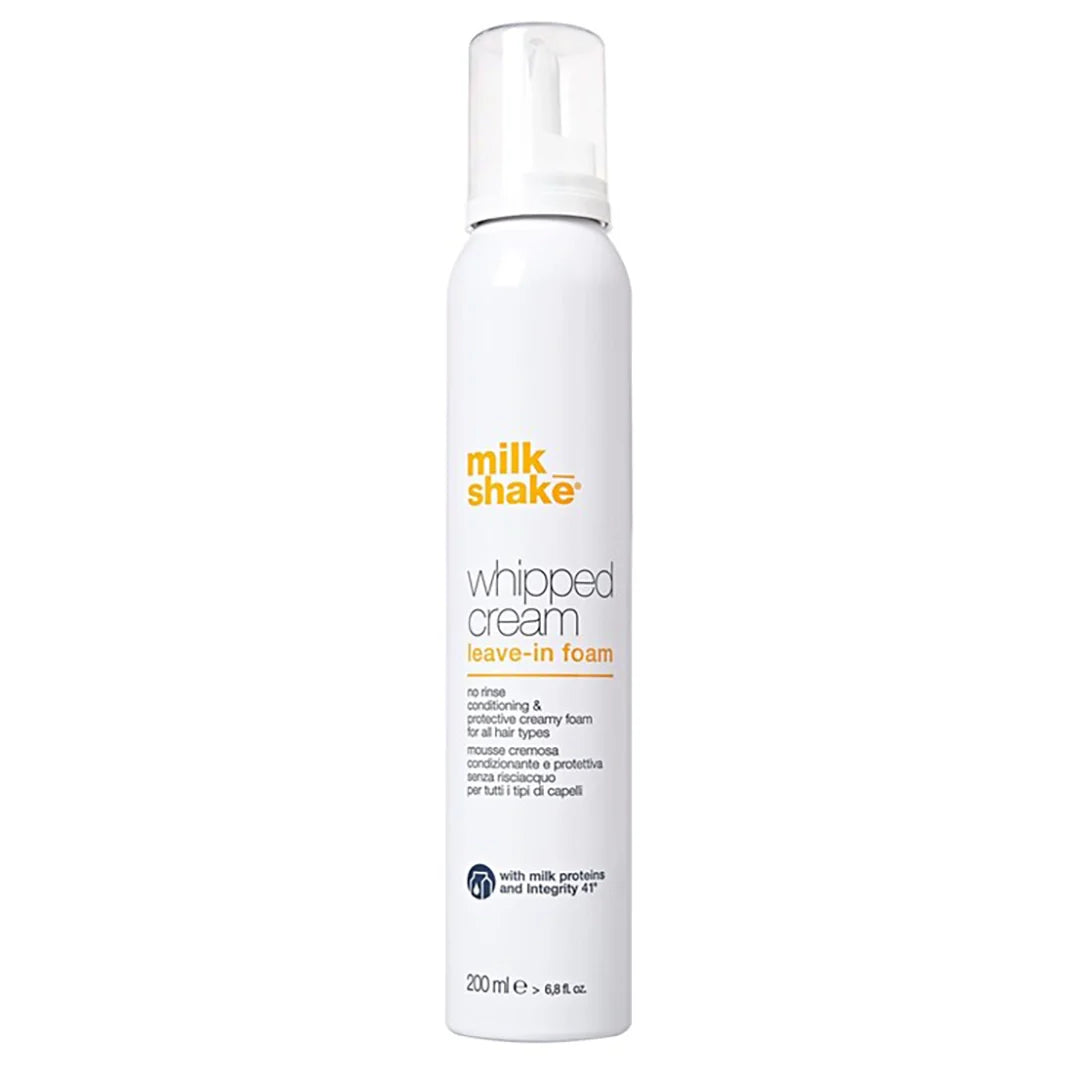
This is the step most people skip and absolutely shouldn't. A leave-in product coats every strand in a layer of moisture and protection that lasts between washes, which means your ends get continuous care rather than just a 90-second hit during the wash.
You've got two excellent milk_shake leave-in options depending on what your hair likes:
- milk_shake Conditioning Whipped Cream is a lightweight whipped-foam leave-in that coats the hair without weighing it down. Apply to damp hair after washing, distribute evenly, and style as usual. The whipped texture makes it easy to distribute and absorbs cleanly into the hair shaft.
- milk_shake Leave In Conditioner is the classic spray leave-in: spritz on damp hair, comb through, style. Slightly lighter than the whipped cream, better for fine hair or anyone who doesn't want a creamy texture.
The Whipped Cream is the richer option for hair that needs more conditioning. The Leave In Conditioner is the lighter daily option. Many clients use both — Leave In Conditioner as the daily driver and Whipped Cream as a deeper alternative once or twice a week.
Both also have a noticeable milk_shake fragrance, which is part of the brand's appeal — lots of clients comment on how nice their hair smells after using these products. For other leave-in options across professional brands, browse our wider leave-in conditioner collection.
Step 3: Seal the Ends With milk_shake Incredible Milk
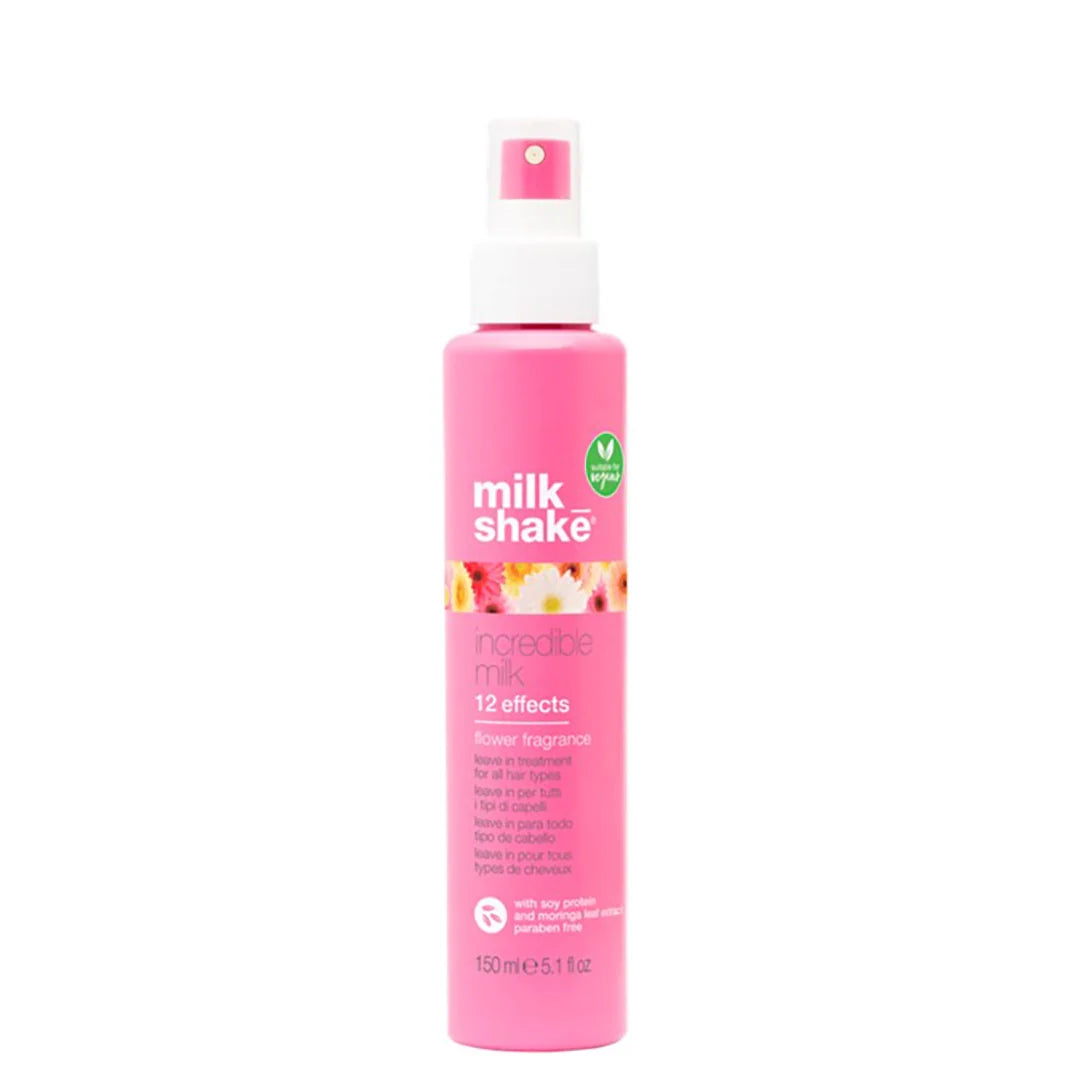
This is the step that actively prevents new split ends from forming. milk_shake Incredible Milk is the brand's cult-favourite leave-in spray with 12 clinically claimed effects — and two of those are specifically split-end-related: it contributes to the repair process of damaged hair and split ends, and it smooths and seals the cuticle to stop new splits forming.
It also acts as a heat protectant, which makes it a properly multi-tasking product. Spray it on towel-dried hair before blow-drying, before flat-ironing, or before tonging. The formula contains milk proteins, fruit extracts, hydrolysed quinoa, UV filter, raspberry extract, mango butter and argan oil — a genuinely comprehensive blend.
The 12 effects in full: protects from UV rays, contributes to repair of damaged hair and split ends, smooths and seals the cuticle, protects from heat, detangles, maintains hair style, adds maximum shine, creates body and volume, controls frizz, banishes split ends, makes straightening easier, and maintains colour. Most multi-benefit products promise this and underdeliver. Incredible Milk genuinely lives up to most of the claims, which is why it's been a cult product for years.
For comparison with other heat protectants in your routine, browse our heat protection collection.
Step 4: Trim (Just a Little) Every 6-8 Weeks
Here's the part products can't do: a regular trim. Once a hair has split, it can't be permanently fused back together. The split will travel up the strand if left alone, eventually causing breakage further up. A small trim every 6-8 weeks removes the splits before they progress, which keeps your length looking healthier and means less length lost overall in the long run.
Most clients think regular trims slow down their hair growth, but the opposite is true — neglected ends break off at a faster rate than the roots grow, so without trims you end up with shorter hair, not longer. A small trim (1cm or so) every 6-8 weeks is genuinely the way to grow your hair longer over time.
The Complete milk_shake Split-End Prevention Routine
Putting it all together, here's the full routine we'd recommend for clients with persistent split ends:
- Wash 2-3 times a week with milk_shake Moisture Plus Shampoo. Don't over-wash. Daily washing strips moisture and contributes to split ends rather than helping.
- Follow with milk_shake Moisture Plus Conditioner on mid-lengths and ends only. Leave 1-2 minutes. Rinse with cool water.
- Apply milk_shake Conditioning Whipped Cream or Leave In Conditioner to damp hair after every wash. Don't skip this step.
- Spritz milk_shake Incredible Milk before heat styling — every time, without exception. Distribute through the lengths.
- Style as usual. Use the lowest heat setting that gives you the look you want.
- Book a trim every 6-8 weeks. A small trim is enough to keep splits in check.
- Once a week: Replace your normal conditioner with a deep treatment mask. Browse our treatments and masks collection for milk_shake's mask range and other options.
Stick with this routine for 4-6 weeks and the visible difference in your ends is genuine. Hair that previously felt rough at the tips will start to feel smoother and more cohesive — that's the cuticle laying flat and the split sections being sealed.
Other Tips to Prevent Split Ends
A few extra habits that make a real difference alongside the product routine:
- Sleep on silk or satin. Cotton pillowcases create friction overnight that roughens the cuticle. Silk or satin pillowcases (washed weekly) prevent this overnight damage.
- Towel dry gently. Press dry with a microfibre or cotton T-shirt rather than rubbing aggressively. Rough-towelling is one of the most common causes of mid-shaft damage that progresses to split ends.
- Lower your heat tool temperatures. 180-190°C is plenty for most styles. 220°C+ is overkill and causes faster cumulative damage.
- Detangle gently and from the bottom up. Start at the ends and work your way up to the roots. Brushing top-down forces tangles down through the lengths and breaks the strands. A wide-tooth comb or detangling brush is gentler than a paddle brush. Browse our hair brushes collection for options.
- Avoid tight hair ties. Tight elastics pull and break the hair where they're tied. Use silk scrunchies or soft fabric ties. Spiral phone-cord style ties also reduce breakage.
- Protect from the sun. UV damages the cuticle. A hat or a UV-protective product before extended sun exposure helps significantly. milk_shake Incredible Milk includes UV protection, so you're covered when using that.
- Don't skip conditioner. Some people skip conditioner because they think their hair gets oily. Use it on mid-lengths and ends only (never the roots) and you'll get the protective benefit without the greasy roots.
Split Ends FAQs
Can products actually repair split ends?
Not permanently. Once a strand has split, no product can fuse it back together. What products can do is temporarily seal the splits so they look better, prevent the splits from progressing further up the strand, and prevent new splits from forming. The only permanent fix for an actual split is to trim it off. Products are about prevention and management, not magic repair.
How often should I get a trim if I have split ends?
Every 6-8 weeks is the sweet spot for most clients. More often if your ends are particularly fragile or you're growing out a heavily damaged head of hair. Less often (every 10-12 weeks) if your routine is solid and the splits are well controlled.
Does cutting hair make it grow faster?
No, but it makes it grow longer over time. Hair grows from the root, so trimming the ends doesn't affect the growth rate. However, neglected ends break off faster than the roots grow, so without trims you end up with shorter hair, not longer. Regular small trims protect your length retention.
Can I use Incredible Milk every day?
Yes. milk_shake Incredible Milk is designed for daily use and is one of the lightest leave-in products on the professional market. Most clients use it every time they style — before blow-drying, before flat-ironing, or just on damp hair before air-drying. The bottle lasts most clients about 3-4 months with daily use.
Is milk_shake suitable for fine hair?
Yes. milk_shake is one of the better brands for fine hair because the milk-protein-based formulas are lightweight and don't weigh hair down the way heavier conditioning products can. The Moisture Plus range works particularly well on fine hair that's also dry. The Leave In Conditioner spray is lighter than the Whipped Cream for very fine hair specifically.
Is milk_shake safe for colour-treated hair?
Yes. milk_shake products are colour-safe and won't strip dye or shift tone. The milk-protein formulas actually help maintain colour by smoothing and sealing the cuticle, which slows the rate at which pigment escapes. For more colour-safe options, browse our shampoo for coloured hair collection.
What's the difference between Moisture Plus and Make My Day?
Moisture Plus is the deep hydration range for genuinely dry, dehydrated or thirsty hair. Make My Day is the everyday range for normal hair that wants to stay healthy. For split ends specifically, Moisture Plus is the better starting point because split ends are almost always associated with dryness. Many clients use Moisture Plus once or twice a week for the deep moisture and Make My Day for everyday washes.
Will a hair mask help with split ends?
Yes, alongside the rest of the routine. A weekly deep conditioning mask delivers significantly more moisture and conditioning than a daily conditioner can in the time it sits on the hair. milk_shake's mask range plus options from brands like Olaplex, K18 and Maria Nila are all good picks. Browse our complete treatments and masks collection for the full range.
Are milk_shake products vegan?
The base ingredient across most of the range is milk protein, which is dairy-derived rather than vegan. milk_shake do make some vegan-friendly products, but the core Moisture Plus and Incredible Milk lines contain milk proteins. For fully vegan alternatives, our vegan shampoo collection includes Maria Nila, Amika and other brands with similar performance.
How long until I see results from this routine?
Some clients notice immediate softness in the ends after the first wash with Moisture Plus and Incredible Milk. The genuine structural improvement (less new split formation, longer-lasting smoothness) takes 4-6 weeks of consistent use. The biggest visible difference comes after a trim that removes the worst of the existing splits, then maintaining the routine going forward to prevent new ones.
Browse the full milk_shake collection at Revive, our wider treatments and masks collection across all professional brands, our leave-in conditioner range, and our heat protection collection. We're a working hair salon, not a faceless reseller, so if your split ends are bad and you're not sure where to start, drop us a message and we'll talk you through it — and book you in for a trim while we're at it.
Free UK delivery on every milk_shake order at Revive Hair Artists.


