

Why You Should Use Heat Protectant: A Stylist's Guide
Thomas StrangwoodIf you use a hair dryer, straightener, curling tong or any other hot styling tool, you need heat protectant in your hair. Not sometimes. Not occasionally. Every single time. Hot tools can reach temperatures of 230°C or higher, and at that heat, unprotected hair starts to break down at a structural level. The good news is that the right heat protectant solves this almost entirely — and it takes ten seconds to apply.
We talk to clients about heat protection constantly at Revive in Codsall, because it's one of the easiest fixes for the most common hair complaints: damage, breakage, dullness, frizz, and colour fade. Here's the proper salon guide to why heat protectant matters, how it actually works, and the Maria Nila heat sprays we reach for most often.
What Is a Heat Protectant?
A heat protectant is a leave-in product designed to create a barrier between your hair and the heat of your styling tools. Most modern heat protectants do three things at once:
- Form a thermal barrier on the surface of each hair strand. This barrier reduces the amount of heat that reaches the actual hair cortex, where damage happens.
- Smooth the cuticle so the hair lies flat as it dries or styles, which improves shine and reduces frizz at the same time.
- Lock in moisture by sealing the cuticle, so the hair doesn't dehydrate from the heat exposure.
The best heat protectants also add conditioning ingredients (proteins, plant oils, vitamins) that nourish the hair while protecting it. Used properly, a heat protectant means you can heat-style frequently without the damage that usually comes with that.
Why You Should Always Use Heat Protectant
The case for heat protectant comes down to one simple fact: heat damages hair, and there's no way around that. But the right protection genuinely minimises the damage. Here's what's actually happening when you skip it:
- Hair cuticles lift and break. The outer layer of your hair (the cuticle) is made of overlapping protein scales. High heat causes them to lift, crack and eventually break off entirely. The result is rough, dull, frizz-prone hair.
- Internal proteins denature. Inside the hair, keratin proteins give the strand its structure and strength. Sustained high heat changes their molecular shape permanently. This is the damage that doesn't grow out — it requires cutting.
- Moisture evaporates. Hot tools pull water out of the hair shaft. Without protection, your hair becomes increasingly dehydrated with each use, leading to brittleness and breakage.
- Colour fades faster. Heat opens the cuticle, which lets colour pigment escape. Heat-styled coloured hair without protection loses its tone weeks faster than it should.
- Split ends multiply. Damaged ends split, and once they've split they can't be repaired — they have to be cut off. Heat damage is one of the leading causes of premature split ends.
Compare that with hair that's been heat-protected consistently: smoother, shinier, fewer split ends, better colour retention, fewer trips to the salon for damage repair, and longer overall length retention. The 10 seconds it takes to spray heat protectant before styling is one of the best returns on time you can get in haircare.
For hair that's already damaged from heat use, browse our treatments and masks collection repair work alongside ongoing heat protection is the route back to healthy hair.
How to Protect Your Hair From Heat
Heat protectant is the single biggest fix, but a few other habits make a real difference too. Use these together for the strongest combined effect:
- Apply heat protectant every time. Most heat protectant sprays last in the hair until your next wash. If you heat-style daily, reapply each time. If you wash and don't heat-style, you don't need to reapply.
- Lower the temperature on your hot tools. Most hot tools default to 220°C or higher, which is unnecessary for most styles. 180-190°C works fine for the majority of straightening and curling on healthy hair, and 160-170°C is plenty for fine or damaged hair. Lower temperatures mean less damage with the same finish.
- Never style soaking-wet hair with hot irons. Wet hair is much more vulnerable to heat damage than damp hair. Always blow-dry first (with heat protection applied) to about 80-90% dry before reaching for a flat iron or curling tong. The exception is when using specifically wet-to-dry straighteners, which are designed for damp hair.
- Use the cool shot at the end of each blow-dry section. Most people don't bother. The cool shot button sets the shape into the hair as it cools and helps the cuticle settle back down, which means less heat exposure for the same result.
- Skip the heat entirely sometimes. Even one heat-free day a week makes a noticeable cumulative difference over months. Air-dry, embrace your natural texture, or use no-heat styling methods (foam rollers, braids, hair scarves) to give your hair recovery time.
- Use repair products alongside heat protection. If your hair is already damaged, layer your heat protection over a bond-repair leave-in or look at our Maria Nila Structure Repair guide for the full repair-focused routine.
The Best Heat Protectants From Maria Nila
Maria Nila makes three distinct heat protectants, each designed for slightly different uses. Knowing which one suits your routine makes the difference between "heat protection that helps" and "heat protection that genuinely transforms how your hair feels."
Maria Nila Cream Heat Spray
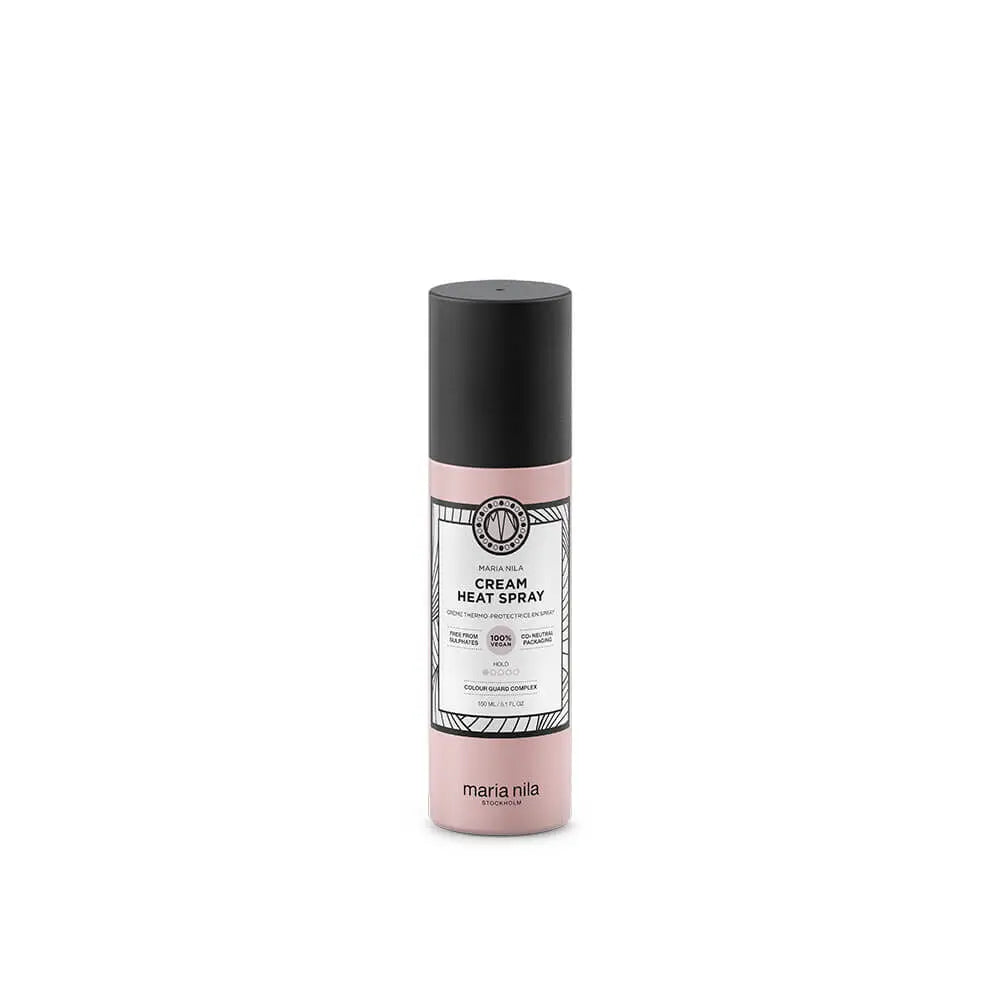
Maria Nila Style & Finish Cream Heat Spray is the everyday workhorse of the range and our default recommendation for most clients. The "cream" in the name is the key — this is a nourishing, cream-based spray rather than a thin liquid, which means it delivers conditioning alongside heat protection in a single step.
What you actually notice when you use it: hair feels softer rather than dry after heat styling, shine is visibly improved, and the cuticle stays smoother through the day. It works on both damp and dry hair, so it's flexible enough for whatever stage of styling you're at.
For shoulder-length hair, 3-5 sprays from about 20cm away gives even coverage. Distribute through with a wide-tooth comb or your fingers, then style as usual. The 150ml bottle lasts most clients 3-4 months with daily use.
Best for: Everyday heat styling, hair that's slightly dry, anyone wanting one heat protectant to cover most uses, and clients who want extra shine alongside the protection. For other shine-boosting options, browse our hair oil collection for products that pair well with Cream Heat Spray.
Maria Nila Quick Dry Heat Protection Spray
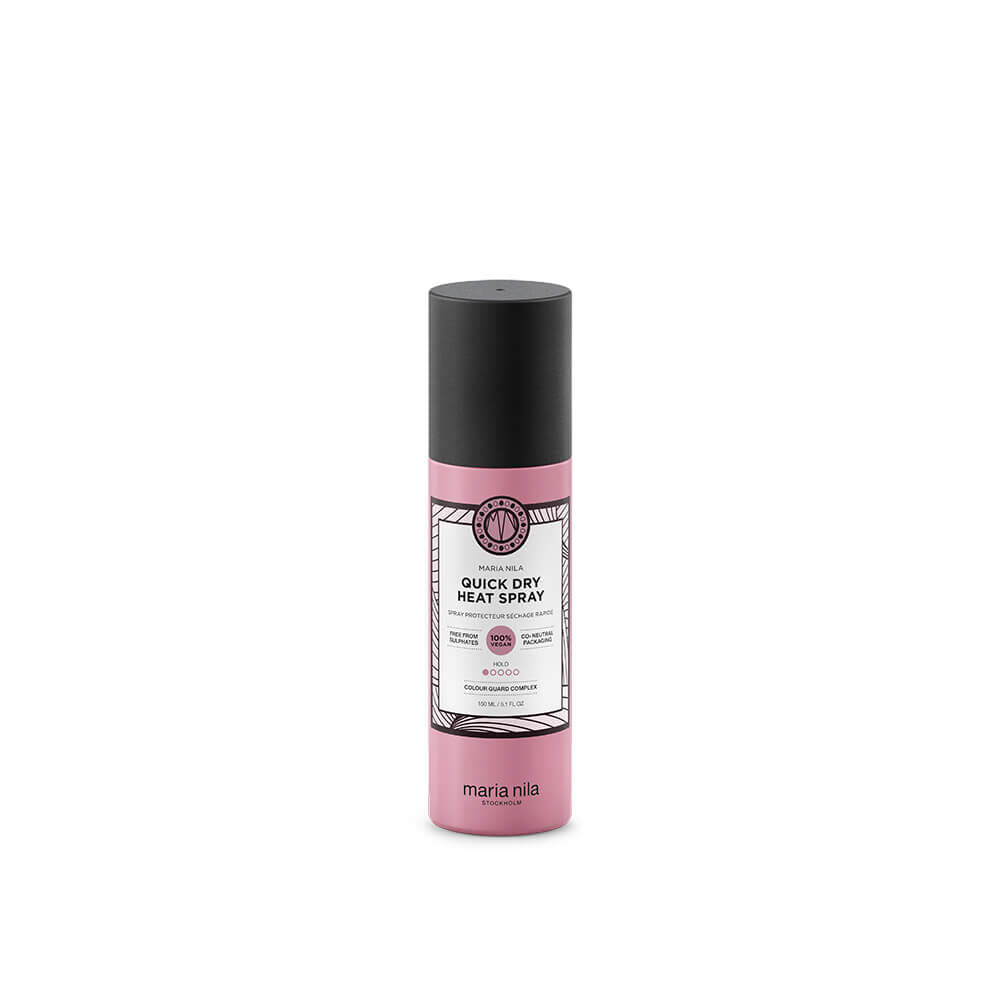
Maria Nila Quick Dry Heat Protection Spray is the one to reach for if blow-drying takes a long time and is making your hair worse in the process. It's a lightweight spray with water-repellent ingredients that actively speeds up the drying process while protecting against the heat damage that long drying causes.
The reason this matters: every minute your hair is under the dryer is a minute it's being exposed to heat. Reducing drying time by 20-30% (which most users notice) means measurably less cumulative heat damage over weeks and months. Long-haired clients in particular notice the difference — going from a 15-minute blow-dry to a 10-minute one is a meaningful change.
The finish is also glossy and clean rather than coated. Use on damp hair before blow-drying, distribute through, then dry as normal.
Best for: Long or thick hair where blow-drying takes time, anyone wanting to speed up their morning routine, clients with fine hair that gets damaged by extended heat exposure, and frequent blow-dryer users (i.e. nearly everyone).
Maria Nila Shaping Heat Spray
The Maria Nila Shaping Heat Spray is the third option and a slightly different beast. It's a dual-action spray that combines heat protection with light hold, so it's ideal for clients who use heat tools for setting curls, waves or shape rather than just smoothing. The shaping aspect means the style holds better after the heat is removed, which is what you want from a tool like a curling wand or barrel.
The 250ml size also makes it the better-value option per ml if you're a heavy user.
Best for: Clients using curling tongs, hot rollers, or any heat tool for setting a defined shape, blow-out clients who want their volume and curl to last longer, and anyone wanting to combine styling and protection in a single product.
Which Maria Nila Heat Protectant Should You Choose?
The quick decision tree we use in the salon:
- One product to cover everything: Cream Heat Spray. The most versatile and the most-recommended single pick.
- Blow-drying takes ages or your hair is long: Quick Dry Heat Protection Spray.
- You curl, wand or roll your hair regularly: Shaping Heat Spray.
- You do all of the above: Many clients use the Quick Dry for blow-drying and the Cream Heat Spray or Shaping Heat Spray before flat irons or curling. They layer well.
For other heat protection products across professional brands, browse our complete heat protection collection, which includes 16 products from Maria Nila, Amika, Moroccanoil, Color Wow, Olaplex and more.
How to Apply Heat Protectant Properly
Most people apply heat protectant wrong, which is why it sometimes seems not to work. Here's the technique we use on clients:
- Towel-dry to remove excess water. Heat protectant should go onto damp hair, not soaking wet hair. Water dilutes the spray before it can coat the cuticle properly.
- Section your hair. Two to four sections for medium to long hair, more for thicker hair. This makes sure every part gets coverage rather than just the surface.
- Hold the bottle 15-20cm from the hair. Too close gives concentrated patches, too far disperses the spray before it lands. Roughly a handspan is right.
- Apply to mid-lengths and ends first. These are the parts most exposed to direct heat from straighteners and tongs. Roots get less heat exposure (and more conditioning) so they need less.
- Distribute with a comb or your fingers. Don't just spray and leave — comb the product through so every strand is coated. Browse our hair brushes collection for combs and detangling brushes.
- Let it absorb for 30 seconds before applying heat. The spray needs a moment to bond with the cuticle. If you blow-dry immediately, you're partially blow-drying the protectant off before it's done its job.
- Reapply only if needed. Most heat sprays last until your next wash. Reapply if you're heat-styling on consecutive days or after a workout/swim that's wet your hair.
Heat Protectant FAQs
Do I need heat protectant for blow-drying or just for irons?
Both. A hair dryer reaches around 60-80°C in normal use, and up to 140°C on high heat. While this is lower than a straightener (220°C+), it still causes cumulative damage over time, especially because blow-drying takes much longer than 30 seconds with a flat iron. Use protectant for blow-drying as well as irons.
Can I use heat protectant on dry hair?
Yes for some products. Maria Nila Cream Heat Spray works on both damp and dry hair. Quick Dry Heat Spray is designed for damp hair before blow-drying. As a general rule, protectants designed for blow-drying go on damp hair, and protectants designed for irons can go on either damp or dry. Check the specific product instructions.
How often should I use heat protectant?
Every time you use a heat tool. Heat protectant isn't a once-a-week or once-a-fortnight product — it's an every-time-you-heat-style product. The good news is that most last from one wash to the next, so a single morning application covers any heat styling you do that day.
Will heat protectant make my hair greasy or sticky?
Not when used correctly. The Maria Nila sprays in particular are lightweight and designed not to leave residue. Greasiness almost always comes from over-applying (more than 5-6 sprays for shoulder-length hair) or from applying directly to the roots rather than mid-lengths and ends.
Is Maria Nila heat protectant vegan and cruelty-free?
Yes to both. Maria Nila is 100% vegan (Vegan Society certified), 100% cruelty-free (Leaping Bunny certified), climate-positive certified, sulphate-free, paraben-free and colour-safe across the whole brand.
What temperature is safe to use on my hair?
For most healthy hair, 180-190°C is enough for straightening and curling. For fine or damaged hair, drop to 160-170°C. For very thick or coarse hair, you might need 200°C. Most clients use temperatures higher than they need to. Always pair with heat protectant regardless of temperature.
Can heat protectant fix already-damaged hair?
No. Heat protectant prevents future damage but doesn't repair existing damage. For damaged hair, look at repair-focused products like Maria Nila Structure Repair alongside ongoing heat protection. We covered the full repair routine in our Structure Repair shampoo guide.
How long does a 150ml bottle of Maria Nila heat spray last?
For daily use with 3-5 sprays per application, a 150ml bottle lasts roughly 3-4 months. Less frequent users (a few times a week) can stretch this to 5-6 months. The 250ml Shaping Heat Spray lasts proportionally longer.
Can I use heat protectant on colour-treated hair?
Yes, and you really should. Colour-treated hair fades faster when exposed to heat without protection. The Maria Nila range is colour-safe and includes UV protection in some products, which helps the colour last between salon visits. For more colour-safe options, browse our shampoo for coloured hair collection.
Do I still need heat protectant if my dryer has "ionic" or "ceramic" technology?
Yes. These technologies improve the quality of the heat (ionic helps reduce frizz, ceramic distributes heat more evenly) but they don't eliminate the heat itself. Your hair is still being exposed to high temperatures and still benefits from a protective barrier.
Browse the full Maria Nila collection at Revive, our complete heat protection collection across all professional brands, our treatments and masks range for hair already showing heat damage, and our hair oil collection for added shine alongside heat protection. We're a working hair salon, not a faceless reseller, so if you're not sure which heat protectant suits your routine, drop us a message and we'll talk you through it.
Free UK delivery on every Maria Nila order at Revive Hair Artists.


