Warm & Crème Wax
Looking for professional-grade warm and crème wax for silky-smooth, hair-free results? You're in the right place. Whether you're a qualified beauty therapist stocking up your treatment room or a confident at-home waxer who wants proper salon results, our warm and crème wax collection brings together trusted professional brands in one place — covering everything from honey-resin classics to gentle titanium dioxide crème formulas designed for sensitive skin.
What is warm and crème wax?
Warm wax (sometimes called soft wax or strip wax) is the go-to wax format for larger body areas — legs, arms, back, chest, bikini line and underarms. Unlike hot wax (which is applied thick and pulled off without a strip) or hard wax beads (which set and lift in one piece), warm wax is heated to a low working temperature, spread in a thin, even layer over the skin, and removed using a fabric or paper waxing strip. It's the format every professional therapist learned on for a reason: it's quick, hygienic, predictable, and ideal for covering wide surface areas in minutes rather than hours.
Crème wax is the modern, kinder cousin of traditional warm wax. The cream-based formulas are enriched with soothing ingredients and titanium dioxide, which acts as a buffer between the wax and the skin. The result is a wax that glides on without dragging, grips hair firmly, but treats sensitive skin gently — ideal for clients (or yourself) who find traditional honey waxes too aggressive.
Choosing between warm wax and crème wax
The right format depends on your skin and the area you're treating:
- Honey-based warm wax — the classic option. Excellent adhesion, removes hair properly from the root, and works brilliantly on stronger, coarser hair on legs and arms. The honey and resin blend is the gold standard for fast salon-style treatments. Best for normal to robust skin.
- Crème wax — the gentle option. Titanium dioxide and added soothing ingredients (often chamomile, aloe vera, or zinc oxide) act as a barrier between the wax and the skin. Glides on smoothly, grips even very fine hairs, and significantly reduces redness and irritation post-treatment. Best for sensitive skin, fair skin that flushes easily, the bikini line, the face, or first-time waxers.
- Tea tree, aloe vera or zinc-enriched warm wax — sit between the two. Honey-grade adhesion with added soothing actives. A solid middle-ground choice for combination skin or anyone with mildly reactive skin who still wants the grip of a traditional warm wax.
What you need for warm and crème wax treatments
Warm and crème waxes need a wax heater (sometimes called a wax warmer or wax pot) to bring them to working temperature — typically around 40-50°C. You'll also need waxing strips (fabric or paper, depending on your preference), wooden waxing spatulas in the appropriate sizes for the area you're treating, pre-wax cleanser to prep the skin, and post-wax oil or lotion to soothe and remove residue. Most professional therapists also keep talc on hand to help the wax grip more reliably to fine hair on certain skin types. If you're new to warm wax, buying a complete waxing kit is genuinely the easiest way to get all the right kit in one go.
Why professionals choose warm and crème wax
Speed is the headline reason. A full leg warm wax treatment can be completed in 20-30 minutes by a confident therapist, whereas hot wax on the same area would take significantly longer. Hygiene is the second — strip waxing means no double-dipping (each strip is used once and discarded), which is critical for salon hygiene standards. Predictability is the third — warm wax behaves consistently across different skin types and ambient salon conditions, where hot wax can be temperamental. For body areas, it's still the most efficient, reliable wax format on the market.
Frequently asked questions
Is crème wax better than honey wax for sensitive skin?
Generally, yes. The titanium dioxide and added soothing ingredients in crème waxes create a buffer that reduces direct skin contact with the resin, which is what causes most irritation. If you find honey waxes leave you red, sore or bumpy for hours afterwards, switching to a crème formula often makes a noticeable difference.
Can I use warm wax on my face?
Yes, but choose carefully. Crème waxes designed for facial use are gentler and formulated specifically for the delicate skin of the upper lip, brows, and chin. Standard body-grade honey warm waxes are usually too aggressive for facial skin. For brows specifically, hard wax beads are often the preferred professional choice.
How long does warm wax last between treatments?
Most clients are hair-free for around 3-4 weeks after a warm wax treatment, with hair regrowing finer and softer over consistent waxing cycles. The exact length depends on individual hair growth rate, the area treated, and how mature your waxing routine is — first-time waxers often need to come back sooner than long-term regulars.
What's the difference between warm wax and hot wax?
Warm wax is applied thinly and removed with a strip; hot wax (also called film wax or hard wax) is applied thicker, sets on the skin, and is removed without a strip by lifting an edge. Warm wax is faster on large areas and more hygienic; hot wax is gentler on sensitive areas like the bikini line and underarms because it grips only the hair, not the skin. Most professional therapists use both depending on the body area.
Which brands of warm and crème wax do you stock?
Browse the products in this collection to see the full current range of professional warm and crème waxes from our trusted brands. We hand-pick our wax range based on what genuinely works in real salon and home use, not just on price.
Shop the warm and crème wax collection
Browse the full range below, or explore our wider professional waxing collection for hot wax beads, wax heaters, waxing strips, spatulas, pre and post wax products, and complete waxing kits. Free UK delivery on all orders.
-
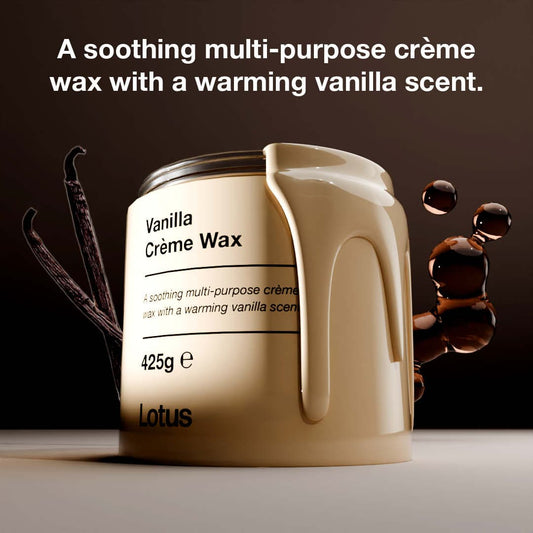
Lotus Vanilla Creme Wax 425g
Vendor:LotusRegular price £15.92Regular price -
waxaway Cream Wax 425g
Vendor:waxawayRegular price £16.49Regular price -
waxaway Warm Wax 425g
Vendor:waxawayRegular price £16.49Regular price -
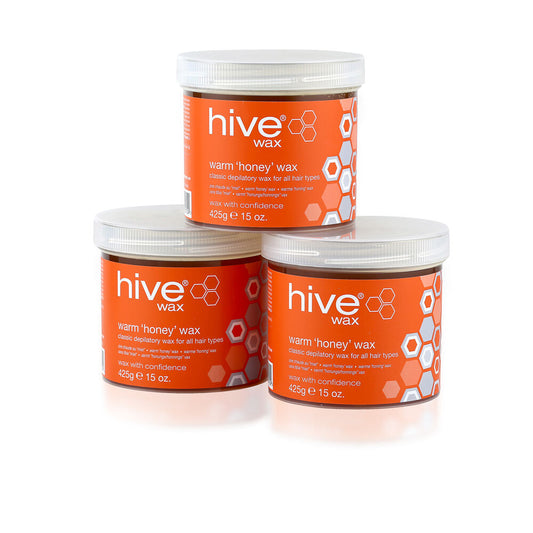
Hive of Beauty Options Warm Honey Wax Pots, 3 x 425g
Vendor:Hive of BeautyRegular price £28.99Regular price -
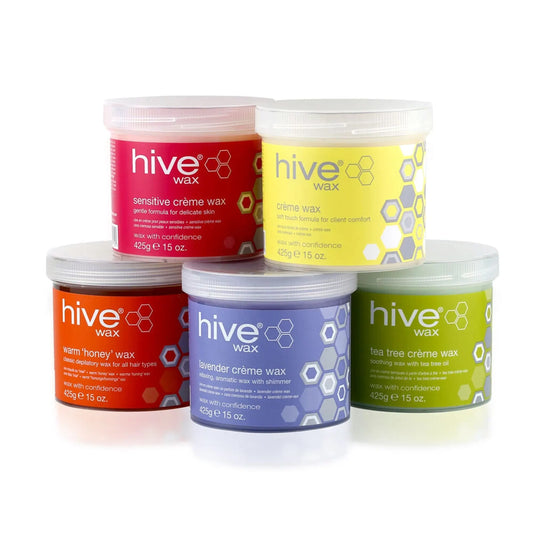
Hive of Beauty Options Crème Wax Pots, 3 x 425g
Vendor:Hive of BeautyRegular price £22.49Regular price -
Hive of Beauty Lavender Shimmer Crème Wax 425g
Vendor:Hive of BeautyRegular price £16.99Regular price -
Hive of Beauty Warm Honey Wax 425g
Vendor:Hive of BeautyRegular price £18.99Regular price -
Hive of Beauty Warm Wax Treatment Pack with Heater
Vendor:Hive of BeautyRegular price £129.99Regular price -
Hive of Beauty Strong Warm Wax For Men 425g
Vendor:Hive of BeautyRegular price £16.99Regular price -
Perron Rigot Cirépil Cristal Océan Strip Pot Wax 800g
Vendor:Perron RigotRegular price £34.99Regular price -
Perron Rigot Cirépil Nacrée Blanche Strip Pot Wax 800g
Vendor:Perron RigotRegular price £34.99Regular price -
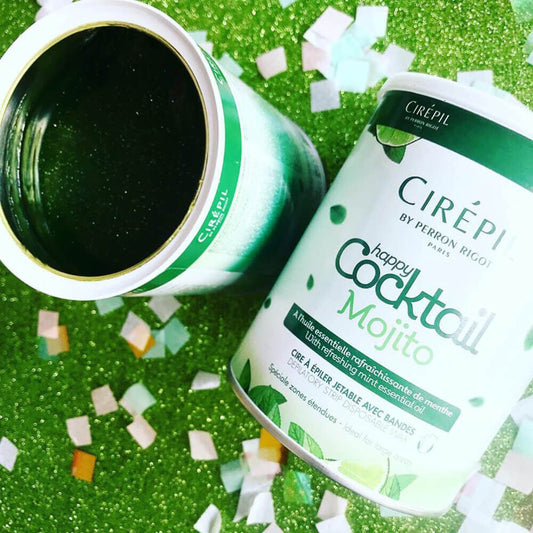
Perron Rigot Cirépil Happy Cocktail Mojito Strip Pot Wax 800g
Vendor:Perron RigotRegular price £34.99Regular price -
Perron Rigot Cirépil Strip Wax Fiorella Pot Wax 800g
Vendor:Perron RigotRegular price £34.99Regular price -
Perron Rigot Cirépil Naturelle Strip Pot Wax 800g
Vendor:Perron RigotRegular price £34.99Regular price -
Perron Rigot Double Scrub Ingrown Hair Skincare 150ml
Vendor:Perron RigotRegular price £24.99Regular price -
Perron Rigot Cirépil Strip Wax Boudoir Pot Wax 800g
Vendor:Perron RigotRegular price £34.99Regular price